
Vision for a Cleaner, Sustainable Hiriya
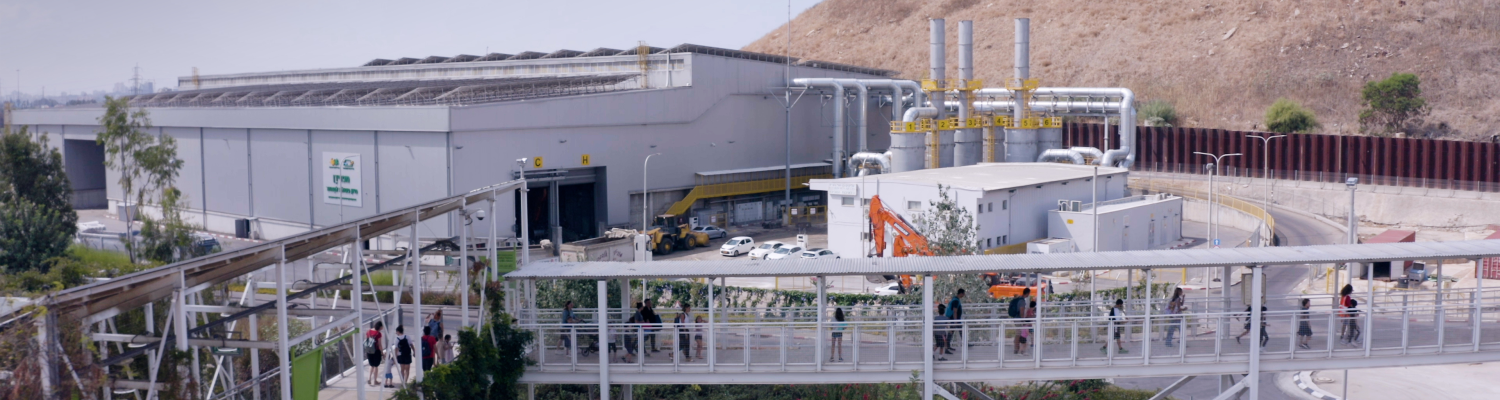
Following the closure of the Hiriya landfill, the Dan Region Association for Sanitation set a vision for transforming the site into a modern waste treatment park.
The goal is to minimize the volume of waste transported south for disposal, ensuring that the responsibility for managing waste generated in the central metropolitan area is handled locally, rather than transferring environmental burdens to the southern periphery.
Odor Challenges in the Tel Aviv Metropolitan Area
The Tel Aviv metropolitan area – Israel’s business, cultural, and industrial hub – operates around the clock, including weekends.
Commercial, industrial, tourism, and residential activity generates large volumes of mixed waste, requiring efficient waste management solutions nearby, including nighttime,
weekend, and holiday operations.
Handling such high volumes of largely unsorted waste carries a risk of odor nuisance. To address this, the Hiriya Recycling Park team implements a comprehensive odor management plan and responds promptly to public odor complaints.
Ongoing Odor Prevention Measures
The Dan Region Association carries out extensive measures to minimize odor emissions at Hiriya Recycling Park, including:
- Expert consultancy: Engaging local and international specialists for internal testing, sampling, and operational advice.
- Meteorological monitoring: Partnering with a dedicated company to provide weather forecasts and analyze wind patterns, linking or ruling out potential sources of odor complaints.
- Continuous coordination: Working closely with the Tel Aviv District Ministry of Environmental Protection and neighboring municipalities to identify additional odor sources and track agricultural or infrastructure activities nearby.
- Odor-neutralizing systems: Installing and maintaining systems at the Transfer Station and RDF Plant entrances. These systems spray an osmogener barrier agent that captures odor molecules. Laboratory tests submitted to the Ministry of Environmental Protection have shown over 70% reduction in odor units with the system in operation.
- Operational procedures: Enforcing protocols related to working hours, door closures, cleaning, leachate management, and rapid waste removal from all four facilities.|
- Environmental monitoring: Continuous tracking of pollutants on-site and in surrounding neighborhoods to detect potential health risks. No harmful concentrations have been detected for employees or residents.
Upgrading Infrastructure for Odor Control
Additional infrastructure and strategic upgrades include:
- Implementing a strategic plan for household waste treatment in enclosed facilities with advanced waste processing and air filtration systems.
- Upgrading active carbon filtration systems in the RDF Plant.
- Replacing all automatic doors at the RDF waste intake pits.
- Converting the leachate treatment facility into a closed system.
- Upgrading and roofing the Transfer Station, including air filtration systems.
- Designing a covered waste unloading area at the RDF Plant entrance for trucks.
Summary
Through advanced odor management and infrastructure upgrades, Hiriya Recycling Park demonstrates how a high-capacity urban waste facility can operate in a densely populated metropolitan area while minimizing odor impacts and ensuring environmental safety.